


[Antique Poison Bottle] Blue Glass Poison Bottle “NOT TO BE TAKEN”
[Antique Poison Bottle] Blue Glass Poison Bottle “NOT TO BE TAKEN”
Deep Blue Signifying Danger
A Collector's Dream Antique, Reflecting British Pharmacy Culture
Product Description:
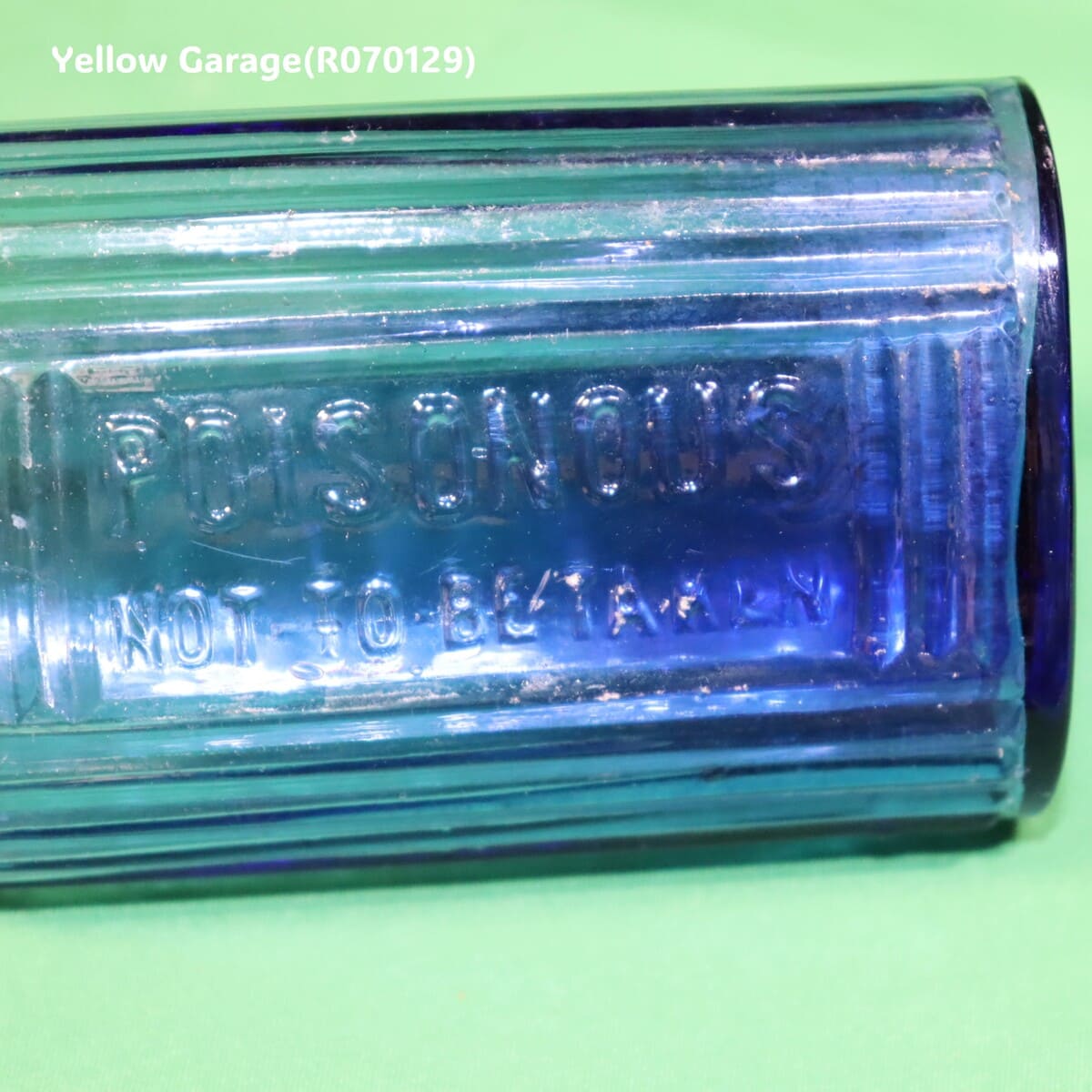
This antique medicine bottle, actually used in Europe, signifies "POISONOUS." The striking deep cobalt blue glass was chosen to prevent accidental ingestion, and the front is prominently embossed with "NOT TO BE TAKEN." The vertical raised lines serve as both a visual and tactile warning, a design feature accommodating visually impaired individuals. The bottom of the bottle has the mold number "K10273," which may indicate a production lot or model number. Estimated to have been manufactured in the early to mid-1900s, one can easily imagine it quietly gracing a pharmacy shelf. (R070129)
Specifications:
・Material: Blue glass
・Size: Height approx. 12.5cm / Width approx. 5.5cm / Depth approx. 3cm
・Era: Estimated 1920s-1950s
・Country of Origin: Europe (likely UK)
・Condition: Slight scuffs and small air bubbles due to age (characteristic of antiques)
・Engraving: "POISONOUS NOT TO BE TAKEN", bottom "K10273"
Recommended Uses:
Ideal for display and decoration in cafes, restaurants, bars, pharmacies, hair salons, general stores, interior design shops, hotel lobbies, galleries, etc. Simply placing it on a shelf, counter, or in a display case will add a vintage atmosphere and historical charm to the space. It can also be used as a single flower vase or a small trinket holder.
Recommended Points:
・Popular as a collector's item: Poison bottles, in particular, are a category of interest to medical history and bottle collectors.
・Striking presence as an interior accent: The deep hue of the blue glass shines beautifully when light hits it.
・Also suitable for film and stage props: The authenticity of a real antique strongly enhances the historical setting of a story.
・Also makes a great gift: Perfect as a surprise gift for medical professionals or antique lovers.
Special Note:
Pharmacies of that era (especially late 19th to early 20th century) kept poisons alongside regular medicines. At the time, medicines now classified as highly potent drugs or poisons, such as arsenic, strychnine, morphine, atropine, and chloroform, were commonly prescribed for treatment. As long as the dosage was followed, they were effective, so pharmacies compounded and sold them according to doctors' prescriptions. In rural areas, where access to hospitals and doctors was not always immediate, pharmacies sometimes served as "mini-hospitals." Pharmacies were places that managed and provided poisons, including antidotes, insecticides, and animal baits (rat poison). Before the establishment of strict poison control systems like today's, pharmacists relied on ethics, record-keeping, and warning labels (e.g., "poison" embossed on bottles) for management. In the UK, the "Pharmacy Act" was enacted in 1851, requiring records for the sale of poisons in pharmacies. Bottles like this one, made of blue or green glass, with warning texts like "POISON" or "NOT TO BE TAKEN," and featuring vertical ribs (tactile identification) or unusual shapes to make them difficult to drink from, were designed to prevent accidental ingestion.
*Based on AI research.
Couldn't load pickup availability
Low stock: 1 left
View full details


発送・注意点
【発送について】
・ご注文確認後、通常 3営業日以内に発送いたします(土日祝・年末年始を除く)。
・ヤマト運輸または佐川急便にて発送いたします(配送業者の指定はできかねます)。
・商品のサイズ・重量に応じて、梱包形態や配送方法が変わる場合がございます。
【梱包について】
・商品の形状・素材に合わせて、丁寧かつ十分に保護した状態で梱包いたします。
・商品を損なわないよう、過剰包装は控えつつ安全性を確保しております。
・再利用資材(段ボール等)を一部使用する場合がございます。
【ご注意事項】
・それぞれの商品を使用していた時代を再現するために、AIが画像を生成しています。実際の商品とは異なることをご理解ください。
・当店の商品はすべて、実際に使用されていたアンティーク・ヴィンテージ品です。経年によるキズ・汚れ・変色・スレなどが見られる場合がございますが、これらは商品の風合い・個性としてご理解ください。
・コンディションについては可能な限り詳しく記載しておりますが、ご不明な点はご購入前にお問い合わせください。
・一点物につき、返品・交換は原則としてお受けしておりません(万一、誤配送や破損があった場合は速やかに対応いたします)。
